
World Condemns Israeli Strikes in Gaza That Killed Dozens of Civilians, Iran-US Tensions Escalate
Amid ongoing diplomacy in Islamabad, Israeli airstrikes in Gaza are reported to have killed at least 47 civilians, including children. European nations and the UN have issued strong condemnations. Tensions with Iran are also heating up after Moscow called US actions a "dangerous provocation."
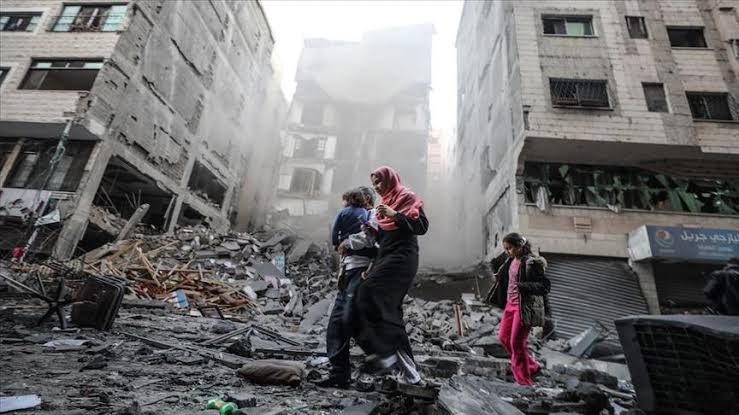
The world has once again been shocked by escalating violence in the Middle East. Israeli airstrikes launched in the Gaza Strip over the past 24 hours have reportedly killed at least 47 civilians, triggering a wave of international condemnation amid fragile diplomatic efforts to ease regional conflict.
The strikes, which Israel claims targeted a "militant command center," according to eyewitnesses and medical personnel on the ground, hit densely populated residential areas in Gaza City and its surroundings. Casualties reportedly include several children and women.
The world seems to be holding its breath amid the chaos of an unending conflict. On one side, diplomats from the United States and Iran are sitting comfortably in Islamabad, Pakistan, trying to negotiate a ceasefire. On the other side, bombs are still falling on Gaza, killing innocent civilians.
'A Scene from Hell' in Gaza
A medical worker from the Red Cross who had just left the site described the harrowing scene.
"Children were running through the rubble. Some lost limbs. Others kept crying out for their mothers. This isn't a battlefield. This is hell," he said over a crackling phone connection.
Gaza's largest hospital, Al-Shifa, is reportedly overwhelmed. The emergency room is packed. Doctors are forced to triage — to choose who gets treated first — while supplies of medicine and blood are running critically low due to the ongoing blockade.
A young mother who survived the attack spoke with a trembling voice. "We were sleeping. Suddenly, everything was destroyed. I lost my husband and my youngest child. What is all this for?"
International Reactions: Condemnation Pours In
The attack has drawn widespread condemnation from the international community, including from countries that usually remain neutral.
In Geneva, Ravina Shamdasani, spokesperson for the UN Office of Human Rights, expressed deep concern. "Attacks on civilians and civilian infrastructure are prohibited under international humanitarian law. We call for an immediate independent investigation," she said in a press statement.
Meanwhile, European nations have begun speaking out. French Foreign Minister Catherine Colonna called the attack "unacceptable" and urged an immediate ceasefire.
"We cannot remain silent while children continue to die," she wrote on her official social media account.
The United Kingdom and Germany, long known as close allies of Israel, also expressed "serious concern" and called for "maximum restraint."
Remarkably, even the United States — usually a vocal supporter of Israel — issued a more cautious statement. A senior White House official who declined to be named said they "do not support large-scale operations in densely populated areas."
The only countries speaking out loudly in Israel's defense were... not many. Even its traditional allies are keeping their distance.
Iran and the US: Provocation Amid a Pause
Amid the widespread condemnation, the main conflict between Iran and the United States continues to heat up. Iranian Foreign Minister Hossein Amir-Abdollahian used the momentum to attack the US once again.
"America's silence in the face of the massacre of Gaza civilians proves that their human rights claims are nothing but nonsense," Amir-Abdollahian said during a press conference in Tehran. "The United States is the true ally of war crimes."
This statement further complicates the US position as it tries to pursue talks with Iran. White House National Security Council spokesperson John Kirby quickly pushed back.
"This is a false narrative. We continue to urge all parties to exercise restraint and prioritize civilian safety. The accusation that the US supports violence is baseless," Kirby said.
From Moscow, Russia — a close ally of Iran — also spoke out. Russian Foreign Minister Sergey Lavrov called the Israeli strikes a "dangerous provocation" carried out with Washington's silent approval.
"Washington wants to divert the world's attention from the failure of their diplomacy in Islamabad," Lavrov said in an interview with Rossiya 1 television.
Threat to the Strait of Hormuz Resurfaces
This issue has directly impacted crude oil prices. Oil prices rose more than 2 percent after news of civilian casualties in Gaza spread widely. Market players fear this escalation will trigger a chain reaction disrupting global energy supplies.
The Strait of Hormuz has once again become the focus of attention. Iran has threatened to close the strait if the US or Israel takes "reckless actions" in Gaza.
"If crimes against Palestinian civilians do not stop, we will not remain silent. No country in the Gulf region will be safe," said an unnamed senior commander of Iran's Revolutionary Guard.
This threat naturally puts Gulf nations like Saudi Arabia and the United Arab Emirates on edge, as they heavily rely on the Strait of Hormuz to export their oil.
Impact on Asia: Rupiah and Fuel Prices
Back home, the impact of these tensions is being felt directly by ordinary Indonesians. The rupiah exchange rate against the US dollar is under pressure again. Market players prefer to hold dollars as a safer asset amid uncertainty.
A currency market observer in Jakarta said, "This isn't just about Gaza. It's about global risk perception. Investors see the Middle East heating up. They're worried this will trigger a larger regional war."
Domestic fuel prices haven't risen yet, but the specter of an increase is already being felt. Several gas stations in East Java and Sumatra are reportedly getting busier as people worry about potential shortages.
"I'm just filling up the tank now," a truck driver at a gas station in Cikarang said. "Just in case prices go up tomorrow."
Diplomacy in Islamabad: Trading Barbs Amid Crisis
Meanwhile, in Islamabad, negotiations between the US and Iran continue, though the atmosphere is uncertain. The Iranian delegation is reportedly using the Gaza incident as a bargaining chip.
"They're saying, 'Look, your allies (Israel) are slaughtering civilians. Why should we trust you?'" said a diplomatic source directly involved in the talks.
"We're finding it hard to answer that," they added.
The US delegation is reportedly trying hard to convince Iran that they are serious about ending the conflict. But the Gaza incident is making everything more difficult.
What Is Indonesia Saying?
From Jakarta, the Indonesian Foreign Ministry issued a statement strongly condemning the Israeli attacks in Gaza.
"Indonesia condemns acts of violence targeting civilians. We urge the UN Security Council to take immediate action to stop the bloodshed," the official statement read.
Indonesia also reaffirmed its commitment to supporting Palestinian independence. "There will be no peace in the Middle East as long as the Palestinian people remain under occupation," the statement continued.
Several Islamic organizations in Indonesia are also planning to hold solidarity rallies in front of the US Embassy in Jakarta on Friday.
Between Peace and Fire
The world seems to be walking a tightrope in the middle of a storm. On one side, there are serious efforts to end the conflict through diplomacy. On the other, the fires of war continue to burn, burning hopes for peace.
The death toll in Gaza keeps rising. Angry speeches echo from Tehran to Washington. And in the midst of it all, ordinary people are once again the victims.
Night is falling in Gaza. The sound of ambulance sirens can still be heard in the distance. Smoke still rises from the rubble of buildings. A father cries over the lifeless body of his child.
In a conference room in Islamabad, diplomats are still busy with their heads down over the negotiating table, searching for the right words to end the war. Meanwhile, outside, death never waits for an agreement.
The world hopes. But hope, amid the chaos of weapons and politics, often feels so fragile.
© 2026 Asia Economy Times