Retaliation Economy: Iran Strikes U.S. Industrial Assets in UAE and Bahrain as War Enters Week Five
Analyzing Iran’s asymmetric revenge doctrine—targeting American steel in Abu Dhabi, aluminum in Bahrain, and Rafael arms in Israel—and the widening economic front of the Gulf conflict.
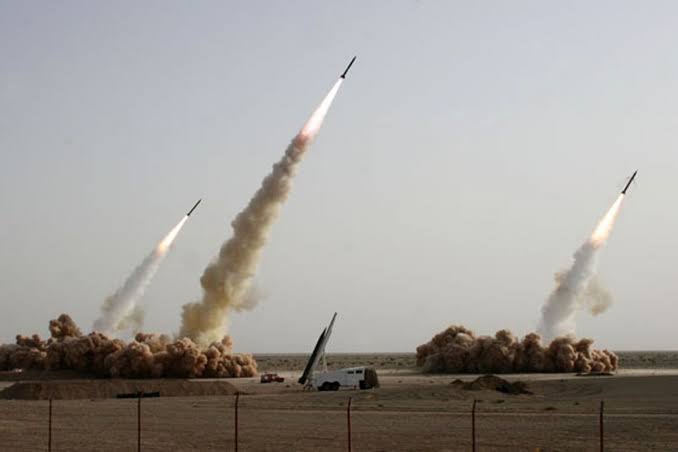
TEHRAN / ABU DHABI / MANAMA – The Middle East conflict has entered a dangerous new phase of economic warfare. In a coordinated revenge operation, Iran and its regional proxies have launched drone and missile strikes against Israeli territory and, more significantly, against U.S.-linked industrial assets in the United Arab Emirates and Bahrain. The targets were not military bases but economic jugulars: an American steel facility in Abu Dhabi and an American aluminum plant in Bahrain.
This marks a strategic escalation as the war enters its fifth week. No longer confined to direct U.S.-Iran military exchanges or the ongoing battle to control the Strait of Hormuz, the conflict has now metastasized into a broader regional economic front. Asia Economia Times analyzes that Iran’s choice of targets reveals a calculated doctrine: inflict maximum economic pain on U.S. allies in the Gulf to force diplomatic isolation of Washington, while demonstrating that no American commercial asset in the region is safe.
Why Steel and Aluminum? Decoding Iran’s Target Selection
Iran’s military statement explicitly named its targets: “American steel industry in Abu Dhabi, American aluminum industry in Bahrain, and the Rafael weapons factory of the Zionist regime.” This is not random violence. Steel and aluminum are foundational industries for the UAE and Bahrain’s ongoing economic diversification plans, heavily reliant on U.S. technology and investment partnerships.
By striking these facilities, Iran sends a dual message. First, to the Gulf Arab states: hosting American industrial assets makes you a legitimate target in this war. Second, to Washington: your economic partnerships in the region are now liabilities, not assets. Asia Economia Times assesses that Iran is attempting to drive a wedge between the U.S. and its Gulf Cooperation Council (GCC) allies by raising the security cost of American alignment.
The Rafael Factor: Striking Israel’s Weapons Backbone
Simultaneously, Iran claimed to have targeted the Rafael Advanced Defense Systems factory—Israel’s state-owned defense contractor responsible for producing Iron Dome, David’s Sling, and Arrow missile interceptors. This is a high-value strategic target. Disrupting Rafael’s production, even temporarily, directly degrades Israel’s ability to replenish its air defense arsenal, which has been heavily taxed by repeated Iranian and Houthi missile barrages.
While the Israeli military reported that its air defenses intercepted most projectiles, the mere attempt to strike such a sensitive facility represents a psychological breakthrough for Iran. It signals that Iranian drones and missiles can reach deep into Israeli industrial zones, potentially forcing Israel to divert more resources to homeland defense rather than offensive strikes against Iran.
The Human Toll: Karaj Bridge Attack and Civilian Casualties
On the home front, Iran’s state television reported that U.S.-Israeli strikes hit a bridge in the city of Karaj twice. The first strike caused civilian casualties; the second struck as emergency teams were responding—a tactic often described as a “double tap” that hinders rescue efforts and compounds civilian suffering.
President Trump, maintaining his aggressive rhetoric, posted on social media that the bridge had collapsed and promised more targets would be destroyed. This public bragging, while politically potent domestically, complicates any potential back-channel diplomacy. For Iran’s leadership, such statements confirm that the U.S. is not seeking a negotiated end but a humiliating capitulation—something no revolutionary regime can survive politically.
Industrial War: Iran’s Steel Plants Forced to Halt Operations
The economic pain is mutual. Iran’s two largest steel plants have been forced to halt operations due to repeated U.S. and Israeli strikes. Steel production is not just an industrial metric; it is a strategic asset for any country engaged in a protracted conflict. Without domestic steel, Iran’s ability to rebuild damaged infrastructure, produce military vehicles, and maintain its construction sector collapses.
However, Asia Economia Times notes a critical asymmetry. While Iran’s steel plants are domestic and their shutdown directly hurts the Iranian economy, the U.S. steel plant in Abu Dhabi and aluminum plant in Bahrain are foreign assets. Their destruction hurts America’s allies and their commercial partners, not the U.S. homeland. This asymmetry suggests Iran is playing a long game of regional economic disruption rather than seeking direct military victory.
The Houthi Fourth Wave: Opening a Red Sea Front
Adding another layer to the conflict, Yemen’s Houthi movement—Iran’s most capable proxy—announced they have launched a fourth ballistic missile barrage against targets in the Tel Aviv area. The Houthis have effectively opened a second major front, forcing Israel to defend on two axes while keeping the Red Sea shipping lane effectively closed to Israeli-affiliated vessels.
For Asian economies, the Houthi campaign is as damaging as the Hormuz closure. The Red Sea route is the primary artery for container shipping between Asia and Europe. With both Hormuz and the Red Sea contested, global shipping companies are now forced to reroute around the Cape of Good Hope, adding 10-14 days to transit times and consuming millions of additional barrels of fuel. Every day this continues, global supply chain costs rise.
Life Under Siege: Nowruz in the Shadow of War
Amid the destruction, a poignant detail emerged from the SINDOnews report: despite the bombing, many Iranian families gathered in Tehran’s Melat Park to mark the 13th day of Nowruz, the Persian New Year. Men smoked, children played, and families picnicked—an act of normalcy that borders on defiance.
Yet a resident noted that checkpoints manned by the Islamic Revolutionary Guard Corps (IRGC) have increased throughout the city. This duality—public resilience paired with heightened security—captures Iran’s current national psychology. The regime is preparing the population for a long war while projecting an image of unbroken daily life. For the international observer, this suggests that Iran’s much-touted “six-month war readiness” is not just about missiles and drones, but about social endurance.
implications for Asia: The End of Gulf Stability
For Asian nations—particularly China, India, Japan, and South Korea—the expansion of the conflict to UAE and Bahrain is a red line crossed. Both nations are critical hubs for Asian trade, logistics, and energy transshipment. Abu Dhabi and Dubai serve as major re-export centers for Chinese and Indian goods bound for the Middle East and Africa. Bahrain hosts a significant U.S. naval base, but also serves as a financial hub.
If Iranian strikes against U.S. commercial assets in these countries become routine, insurance premiums for any business operating in the Gulf will skyrocket. Investment in Gulf special economic zones will freeze. Asia Economia Times projects that Asian multinationals will begin accelerating contingency plans to relocate regional headquarters to Turkey, Oman (which has remained neutral), or back to home countries.
Conclusion: No Endgame in Sight
As the war enters its fifth week, neither side has achieved a knockout blow. Trump’s “Stone Age” threat has not broken Iran’s will to retaliate. Iran’s revenge strikes have not forced a U.S. withdrawal or ceasefire. Instead, both sides are settling into a grim rhythm of escalation: U.S.-Israeli strikes on Iranian industrial infrastructure, followed by Iranian-proxy strikes on U.S. allied commercial assets and Israeli territory.
The diplomatic off-ramps—Hormuz for a ceasefire, or a negotiated halt to proxy warfare—remain blocked by mutual distrust and maximalist rhetoric. Asia Economia Times concludes that Asia must prepare for a prolonged period of Gulf instability. The era of assuming that Gulf Arab states are safe investment havens insulated from regional conflict is over. The new reality is that every American ally in the Middle East is a potential battlefield.
Reference & Metadata
Title: Retaliation Economy: Iran Strikes U.S. Industrial Assets in UAE and Bahrain as War Enters Week Five
Excerpt: Asia Economia Times analysis by M. Rizqie Priyadi on Iran’s revenge doctrine targeting American steel in Abu Dhabi, aluminum in Bahrain, and Rafael arms in Israel. Examining the widening economic front, civilian toll, Houthi fourth wave, and implications for Asian supply chains and investment.