From “Stone Age” to Strait: Decoding Trump’s Escalation Doctrine and Iran’s Strategic Patience
Analyzing the shift from 2-week blitz to open-ended bombardment, Hormuz as the ultimate bargaining chip, and what “Stone Age” really means for Asian energy importers.
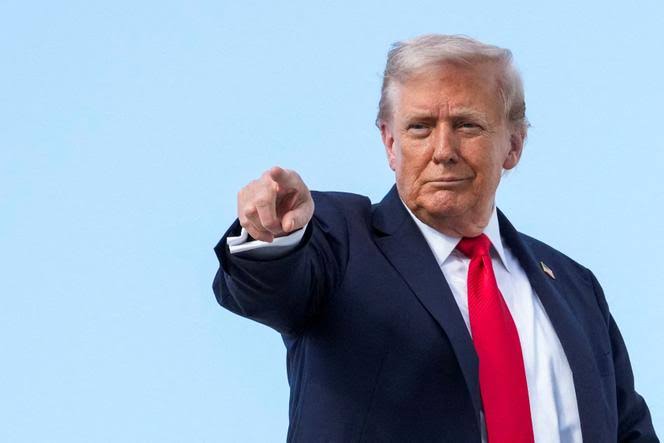
WASHINGTON/TEHRAN – President Donald Trump has dramatically escalated his rhetorical war against Iran, vowing on his Truth Social platform to continue striking the Islamic Republic until it is sent back to the “Stone Age.” This latest salvo marks a significant departure from his earlier claim that any conflict could be concluded within two to three weeks. Now, the Trump administration appears to be settling into a strategy of open-ended bombardment, with one non-negotiable condition for ceasefire: the full reopening of the Strait of Hormuz.
The shift, as reported by CNN Indonesia and confirmed by sources within the U.S. government, reveals a sobering reality: the mission to forcibly reopen the world’s most critical oil chokepoint is far more complex and time-consuming than initially anticipated. Asia Economia Times analyzes that we are no longer looking at a “shock and awe” campaign but a protracted pressure war designed to cripple Iran’s military infrastructure while slowly strangling its economy.
The “Stone Age” Threshold: Rhetoric vs. Reality
Trump’s characterization of reducing Iran to a “Stone Age” civilization is not merely hyperbolic campaign rhetoric. In the context of modern warfare, it signals a strategic shift toward targeting not just military assets, but the very foundations of Iran’s industrial and energy grid. Sources inside the Pentagon suggest this includes sustained strikes on power generation plants, oil refineries, and key logistical nodes.
However, Asia Economia Times notes a critical contradiction. While Trump boasts of total destruction, his stated condition for a ceasefire—an open Strait of Hormuz—implies that his ultimate goal is not regime change but behavioral modification. The “Stone Age” threat is a bargaining lever designed to force Tehran to the negotiating table on Washington’s terms, not a literal promise of pre-industrial annihilation. Iran’s leadership, well-versed in asymmetric warfare, likely interprets this as a sign of U.S. exhaustion rather than limitless resolve.
The Hormuz Ultimatum: A Dangerous Precondition
Trump’s Truth Social post laid out a clear, albeit aggressive, diplomatic framework: “We will consider [a ceasefire] when the Strait of Hormuz is open, free, and active.” This statement transforms the strategic waterway from a geographic location into the central political battleground. For Iran, which has threatened to close the strait for decades as a retaliatory measure, surrendering access without a broader diplomatic win is domestically untenable.
The paradox is stark. The U.S. demands Iran open the strait before any ceasefire talks. Iran insists on a ceasefire before discussing maritime security. This classic deadlock is now being resolved by U.S. military force, with the Pentagon reportedly focused on systematically dismantling Iran’s naval and missile capabilities. Asia Economia Times assesses that this approach risks triggering precisely the outcome Washington wants to avoid: a desperate, last-ditch Iranian attempt to mine the strait or launch a mass swarm attack on commercial shipping.
Timeline Creep: From 2 Weeks to 6 Weeks (and Beyond)
Perhaps the most revealing detail in the CNN Indonesia report is the admission from U.S. sources that the mission to open Hormuz will take longer than the initial four-to-six-week war timeline. The U.S. and Israel launched their initial brutal strikes on February 28. As of this writing, they have passed the four-week mark, with two weeks remaining in their self-imposed window.
This “timeline creep” is strategically significant. It suggests that Iran’s layered defenses—including mobile missile launchers, underground facilities, and a decentralized command structure—have proven more resilient than Pentagon war games predicted. If the U.S. cannot achieve its objectives within six weeks, the conflict risks morphing into the very protracted war of attrition that Iran’s “Resistance Economy” doctrine was designed to survive. Trump’s earlier boast of a “2-week war” now appears to be a political talking point, not an operational reality.
Iran’s Calculated Silence: Strategic Patience or Paralysis?
Notably, official Tehran has not directly responded to Trump’s “Stone Age” threat with equivalent escalation. Instead, Iran’s diplomatic channels have emphasized their six-month war readiness and their refusal to negotiate under fire. This asymmetry in rhetoric is deliberate.
By ignoring Trump’s social media provocations, Iran aims to achieve three objectives. First, to deny Trump the diplomatic victory of an emotional reaction. Second, to frame itself as the responsible actor seeking peace while the U.S. escalates. Third, to buy time for its proxies to reposition and for its dark fleet to continue shipping oil through alternative, untraceable routes. Asia Economia Times views this as a high-risk game of strategic patience, where Iran bets that U.S. domestic political pressure will force a ceasefire before Iran’s military infrastructure is fully degraded.
Implications for Asian Energy Security
For Asian economies—China, India, Japan, and South Korea—the prolonged closure of the Strait of Hormuz is an unfolding catastrophe. Even with the U.S. promising to “open” the strait, insurance premiums for tankers have skyrocketed, and rerouting around Africa adds weeks to delivery times and billions to costs.
A sustained campaign of “return to Stone Age” strikes against Iranian oil infrastructure would effectively remove over 1.5 million barrels per day from global markets. While the U.S. has urged OPEC+ allies to increase output, spare capacity is dangerously low. Asia Economia Times projects that if the strait remains contested for another month, Asian importers will face oil prices exceeding $180 per barrel, triggering inflationary pressures not seen since the 1970s. The only winners in this scenario are non-Iranian oil exporters and global defense contractors.
Conclusion: The Endgame Remains Unclear
As the U.S. shifts from a blitzkrieg to a bombardment strategy, the core question remains unanswered: What does “victory” look like? Trump’s condition—an open Hormuz—is a tactical objective, not a strategic end to hostilities. Even if the strait is reopened by force, Iran retains the capability to harass shipping through proxies in Yemen (Red Sea) and Lebanon (Mediterranean).
Unless the administration defines a clear political endgame that includes a verifiable halt to Iran’s missile program and proxy network, the “Stone Age” campaign risks becoming an open-ended quagmire. For Asia, the message is clear: diversify energy sources and accelerate strategic reserves now. The era of cheap, secure Middle Eastern oil is, at least for the foreseeable future, over.
Reference & Metadata
Title: From “Stone Age” to Strait: Decoding Trump’s Escalation Doctrine and Iran’s Strategic Patience