Trump Threatens to Close the Strait of Hormuz, Iran Fires Back: No Port Will Be Safe
A war of words between Washington and Tehran is sending oil prices soaring. Tanker ships are now idling in open waters, afraid to enter. And drivers across Asia are starting to complain about fuel prices.
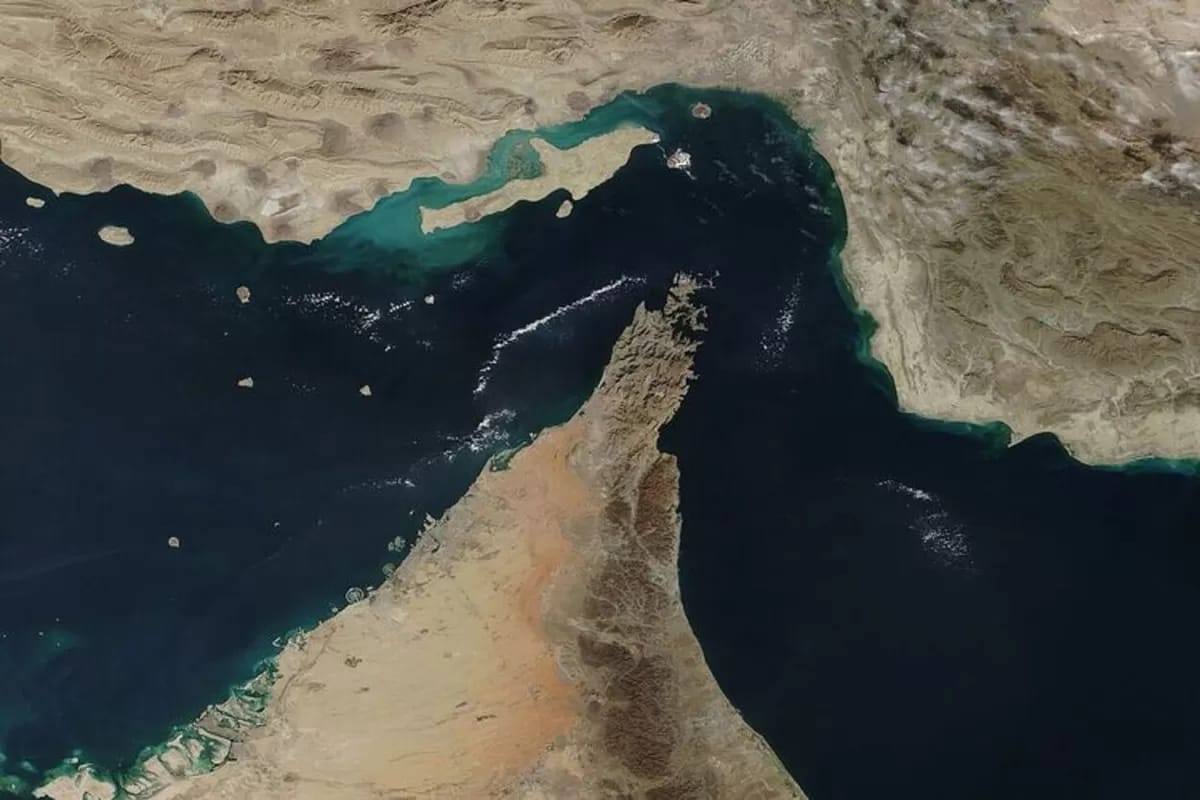
The Strait of Hormuz is once again at the center of global tension. President Donald Trump just dropped a threat that made oil traders' hair stand on end: he said the US will close the Strait of Hormuz if Iran keeps disrupting shipping lanes there.
That statement came out of the White House last night, Washington time. Trump's tone was typical: loud, straight to the point, no beating around the bush. He said the US is fed up with Iran playing games in one of the busiest waterways in the world.
"We will not tolerate this any longer," Trump said during a brief press conference. "If Iran does not stop harassing our ships and those of our allies, we will close the Strait of Hormuz. Period."
It didn't take long for Tehran to fire back. Less than two hours later, Iran's Defense Minister appeared on state television with a cold expression. His response was short but chilling: "If America dares to blockade the Strait of Hormuz, then no port in the Gulf region will be safe."
What does that mean? In plain language, Iran is ready to strike back by attacking oil ports in Saudi Arabia, the UAE, Kuwait, Bahrain, and Qatar. Full-scale naval war. And everyone knows this isn't just empty talk.
What's Actually Happening on the Water
Tanker captains we contacted through maritime communication channels say the atmosphere in the Gulf is extremely tense. A Norwegian tanker captain, who didn't want his name used, said his ship is now drifting in international waters south of the Strait of Hormuz, waiting for clarity.
"Normally, I can negotiate with port authorities. Now? No one is willing to give security guarantees. My ship's insurance has also tripled in just one month," he said over a crackling satellite phone connection.
He told me several of his colleagues who dared to cross the Strait of Hormuz last week were intercepted by fast boats from Iran's Revolutionary Guard. "They weren't shot at, but they were forced to turn back. That's enough to make me not want to take the risk."
On the other side, a retired US admiral who once served with the Fifth Fleet based in Bahrain said Trump's threat isn't actually new. "Every US president since Reagan has threatened the same thing," he said with a small laugh. "The difference is, back then Iran didn't have the capability to actually strike ports across the Gulf. Now they have ballistic missiles and drones that are accurate enough."
Impact on Fuel Prices: Already Being Felt
In Jakarta, a minibus driver named Haji Udin (not his real name) may have never heard of the Strait of Hormuz. But his wallet is already feeling the impact.
"Pertamax went up by a thousand rupiah last week," he said, wiping sweat from his forehead at a bus stop near Pasar Minggu. "I saw on TV that it's because of the war in the Middle East. I don't really understand where the war is. All I know is my fuel money is getting thinner."
He's not alone. In the Philippines, Malaysia, Thailand, and India, fuel prices have started creeping up over the past two weeks. In Singapore, which serves as the benchmark pricing hub for Southeast Asia, Brent crude hit $95 per barrel yesterday. That's the highest level in eight months.
An energy analyst from Wood Mackenzie, whom we contacted in Singapore, said this is just the beginning.
"What we're seeing now is still psychological," he said. "Not a single ship has actually been physically blocked yet. But fear alone is enough to drive prices up. If the Strait of Hormuz is actually closed — whether by the US or Iran — oil prices could jump to $150 or more. And that's not a wild guess."
Why the Strait of Hormuz Matters So Much
For those who don't know, the Strait of Hormuz is a narrow waterway between Iran and the Arabian Peninsula. At its narrowest point, it's only about 50 kilometers wide. But through this strait passes roughly 20 percent of the world's oil every single day.
Countries like Saudi Arabia, Iraq, the UAE, Kuwait, and Qatar have no choice but to use this strait to export their oil by sea. The only exception is the UAE, which has an alternative pipeline, but its capacity is limited.
An energy economics professor from the University of Indonesia, whom we met in Depok, explained it clearly:
"Imagine Jakarta completely gridlocked on every single road. Not a single car can enter or leave. That's what happens to global oil supply if the Strait of Hormuz is closed. Gasoline prices at a roadside pump in Kalimalang will go up — not tomorrow, but within hours."
He added that Asia is the most vulnerable region. "Japan, Korea, China, India, Indonesia — all of them import oil through the Strait of Hormuz. There's no realistic alternative."
What Iran Is Saying
On the Iranian side, their tone is also no joke. In an interview with state television, an unnamed Revolutionary Guard general said his country has prepared "thousands of missiles and drones" ready to destroy oil ports across the Gulf if the US tries to block Hormuz.
"We are not threatening. We are just informing," he said. "Every port from Dubai to Doha will be targeted. America might be able to close Hormuz, but we can ensure that not a single drop of oil leaves the Gulf through any route."
This statement naturally drew an immediate response from Gulf nations. The UAE's Foreign Minister, contacted through a written statement, said his country is "deeply concerned" by this escalation in rhetoric. Saudi Arabia, through the official SPA news agency, stated that the kingdom will "take all necessary steps" to protect its ports.
What Happens Next
Diplomats at the UN have been rushing in and out of meeting rooms over the past two days. But so far, there's no sign that either side is willing to back down.
Trump, as usual, is known for hating to look weak. Meanwhile, Iran's regime is under significant domestic pressure. Small protests are still happening in several cities. And in situations like that, taking a hard line against an external enemy is often the safest way to distract the public.
A Middle East observer from a London-based think tank said we'll probably see more "war of words" before any real action.
"Neither the US nor Iran actually wants an open war," he said. "But neither side wants to look like they're backing down either. So what happens is gradual escalation. This threat, that threat. A little closure here, a little attack there. The ones who lose are all of us, especially Asian countries who just want their oil supply to keep flowing."
Closing: A Story from a Fuel Terminal
Last night, we had a chat with a fuel truck driver at a terminal in Cilincing, North Jakarta. Everyone calls him Pak RT, a nickname because he's the neighborhood chief in his village. He was waiting in line to fill up his truck.
"I heard oil prices are going up again overseas," he said, smoking a cigarette. "But here, they haven't gone up yet. What I'm afraid of is, if they go up, my trucking costs go up. If trucking costs go up, the price of goods goes up. In the end, it's us little guys who get hit again."
He then opened his wallet, showing me its contents — just a few bills left. "This is what's left of my weekly spending money. Hopefully it's enough. Because I heard, people are saying, the war isn't over yet. Still a long way to go, they say."
He then climbed into his truck, started the engine, and slowly left the terminal. The tail lights of his truck disappeared into the dark night. And somewhere, thousands of kilometers away, world leaders are still busy arguing over who has the right to close a strait that determines the fate of people like Pak RT.