
Missiles and Drones Flying Every Night: A US Base Got Hit, and Soldiers Are Sleeping in Hotels Now
From the Strait of Hormuz to the Jordanian border, the night sky has turned into the world's busiest battlefield. Thousands of missiles and drones have been launched. Many were stopped. But the ones that got through? Those are keeping soldiers awake at night — and forcing some of them to leave their own bases.
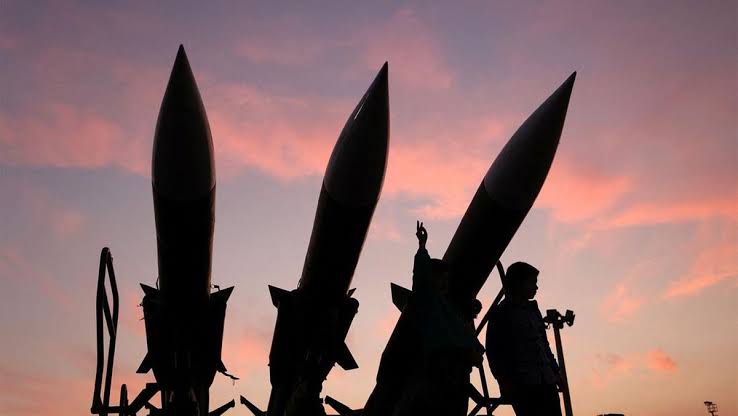
If you think war is still about soldiers shouting and running across open fields, you haven't been paying attention. The war in the Middle East right now is happening mostly in the sky, in the middle of the night, without anyone yelling. What you hear is the sound of a missile launching somewhere far away, then a few minutes later, an explosion. Then sirens. Lots of sirens.
Over the past two weeks, Iran and the groups it backs have thrown thousands of missiles and drones at various targets. Their main targets: US military bases and Israeli positions. Some of those missiles got shot down. But the ones that didn't? That's where the real story is.
What the Numbers Actually Mean
A report from the Jewish Institute for National Security of America (JINSA) came out in late March. According to their numbers, Iran has launched about 4,200 missiles and drones since this current round of fighting escalated. That number didn't come out of thin air. It's based on intelligence gathered from multiple sources, including from inside Iran itself.
Now, here's the part that sounds good on paper: US, Israeli, and allied Arab air defense systems intercepted more than 90 percent of those. That's impressive, no doubt.
But let's do the math. Ten percent of 4,200 is 420. That's 420 missiles and drones that got through. That's not a small number. That's enough to cause real damage, real fear, and real disruption.
A Soldier Told Me: "We Had to Move to a Hotel"
I spoke with a US intelligence officer last week in Amman, Jordan. He didn't want his name used because he wasn't authorized to talk to the press. But he was tired, and tired people sometimes say more than they should.
"The first two weeks were hell," he said, rubbing his eyes. "Every single night, something was flying toward us. Sometimes we knew it came from Iran. Sometimes from Yemen. Sometimes from Iraq or Syria. You can't sleep. Not just because you're scared of getting hit, but because the sirens just keep going off and off and off."
He told me his base — somewhere near the Jordan-Iraq border — got hit by a small drone that slipped past the radar. Nobody died. But the damage was bad enough that they couldn't stay there.
"We moved to a hotel in town," he said, and then he laughed a little. Not because it was funny. Because it was absurd. "Imagine that. US soldiers hiding in a hotel. That's not something they show in the recruitment ads."
One Base in Iraq Is Getting Hit Over and Over
The JINSA report also mentioned that US bases in Iraq and Syria have become favorite targets. Not because they're the most valuable targets in military terms. But because Iran wants to prove a point: that they can hit America anywhere.
Take Ain al-Asad base in western Iraq. Over the past few weeks, drone attacks have forced some personnel to move to safer locations. A military source who asked to stay anonymous told me, "We have a new routine now. We sleep with our clothes on. Helmet and vest right next to the bed. You get used to it, but you never really feel safe."
At Al-Tanf base in Syria, things are even more tense. That's a small base right at the crossroads of Iraq, Syria, and Jordan. It's been hit several times by short-range ballistic missiles. Most were intercepted by Patriot systems stationed there. But one missile landed about 200 meters from the main gate. The explosion shook the command center.
The Big Problem No One Wants to Talk About
Israel's air defense systems — Iron Dome for short-range, David's Sling for medium-range, Arrow for long-range — are among the best in the world. The US has also deployed Patriot and THAAD systems in the Gulf and Jordan.
But there's a problem that military officials don't like to discuss publicly: interceptor missiles are running low.
A Pentagon official, speaking on condition of anonymity, put it bluntly.
"I can't give you exact numbers," he said. "But I can tell you we don't have an unlimited supply. Every time we fire a million-dollar interceptor to take down a twenty-thousand-dollar drone, that's not a sustainable strategy."
He said Iran knows this perfectly well. That's why they keep sending wave after wave of cheap attacks.
"They want us to run out of ammo," he said. "And honestly? It's starting to work."
What Civilians Are Saying
Not all the stories come from soldiers. Regular people in the region are living through this too.
I called a housewife in Kuwait City. She didn't want her name used either. She told me her kids have gotten used to the sirens.
"At first they were terrified. Now they know the routine: when the siren goes off, they grab their tablets and headphones and run to the basement. They watch cartoons while I pray," she said, with a small laugh. But behind that laugh, you could hear the worry. "I don't know how long this will last. I just hope nothing falls near our house."
In Bahrain, near the US naval base that serves as the headquarters for the Fifth Fleet, a fast-food restaurant worker told me business has dropped sharply.
"People are scared to go out," he said. "The attacks usually only hit the base, not the city. But fear doesn't follow logic. Fear just spreads."
What Happens Next?
Military analysts I spoke with all agreed on one thing: Iran isn't stopping anytime soon.
"Drone and missile attacks are Iran's trump card," a retired US general turned analyst told me. "They know they can't win a conventional war against America. But they can make our lives very difficult with these constant small attacks."
He compared Iran's strategy to what the Viet Cong did to America decades ago.
"They're not looking for a big victory. They just want to wear us down. They want the cost of this war — economically and psychologically — to become too high for us to bear."
The question now is: how long can the US and its allies keep up with this pace? Because one thing is certain. Interceptor stocks will never be enough if the attacks never stop.
What You Should Take Away From This
Let me leave you with four things.
First, no matter how advanced air defense systems are, they have limits. Iran has found the weak spot: cheap attacks in huge numbers.
Second, US bases in Iraq, Syria, Jordan, and the Gulf are living under constant pressure. Not every day brings death. But every day brings anxiety.
Third, civilians in the region — from Kuwait to Bahrain — are starting to feel the impact. Not just from direct attacks, but from fear and economic disruption.
And fourth, this war probably won't end quickly. Iran has thousands of drones and missiles. America has great but limited defenses. This is a battle of endurance. The winner will be the side that doesn't get exhausted first.
One Soldier's Last Words
At the end of our conversation, that US soldier in Jordan said something that stuck with me.
"I used to think war was like the movies," he said. "There's a beginning, a middle, and an end. Now I know war isn't like that. War is like... a long argument that never finishes. Except this argument uses missiles."
Then he had to go. The siren went off again. Time to run to the bunker.
© 2026 Asia Economy Times