
Artemis II Successfully Splashes Down in Pacific, NASA: "We Are Going Back to the Moon"
Four astronauts are declared healthy after a 10-day journey around the Moon. This mission serves as the stepping stone for a human landing on the lunar surface, planned for next year.
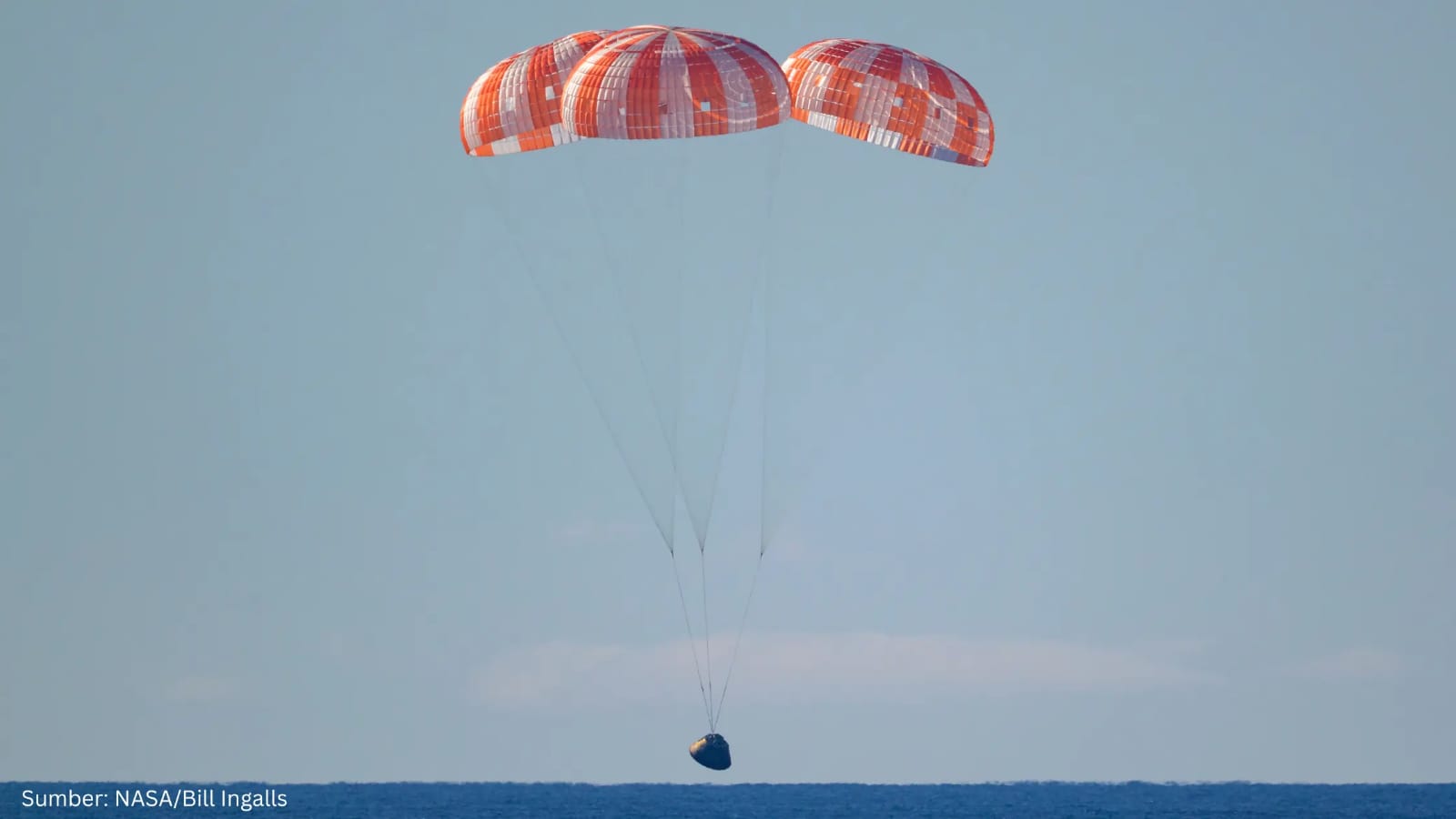
NASA's Orion capsule safely landed in the Pacific Ocean on Tuesday local time, marking the end of the Artemis II mission which lasted ten days. The four astronauts inside were declared healthy and have already been evacuated by recovery teams.
"This is a great day for NASA and for all of humanity," said Bill Nelson, NASA Administrator, during a press conference at the Johnson Space Center in Houston. "We haven't been this close to the Moon since 1972."
Artemis II is the first crewed flight in the Artemis program, following the successful uncrewed Artemis I two years ago. This time, four astronauts — three from the United States and one from Canada — flew around the Moon, traveling approximately 1,500 kilometers above its surface.
It wasn't just a sightseeing trip. They also performed a series of critical tests: approach maneuvers, long-distance communications, and docking simulations that will be used for the landing mission later.
Splashdown in the Pacific, Greeted by an Aircraft Carrier
The landing process was dramatic. The Orion capsule entered Earth's atmosphere at 40,000 kilometers per hour. The temperature outside the capsule reached 2,800 degrees Celsius — hotter than lava.
Three giant parachutes deployed at around 8 kilometers in altitude, slowing the capsule to 32 kilometers per hour before it finally hit the Pacific waters off the coast of Baja California, Mexico.
Recovery teams from the USS Portland aircraft carrier moved immediately. In less than an hour, all four astronauts were evacuated by helicopter and flown to the ship for initial medical checks.
"I saw their smiles from a distance," a crew member we contacted via radio said. "They were exhausted, but happy. Canadian astronaut Jeremy Hansen even waved before getting into the helicopter."
The Four Astronauts: Who Are They?
The mission commander is Reid Wiseman, a NASA astronaut who has flown to space once before. The pilot is Victor Glover, the first Black astronaut to become part of a Moon mission.
The other two are Christina Koch, a female astronaut who previously held the record for the longest single spaceflight by a woman at the International Space Station (340 days), and Jeremy Hansen from the Canadian Space Agency (CSA).
In a short interview before the mission, Hansen said, "I grew up on a farm in Ontario. My dream was just to become a pilot. Now I'm going to the Moon. Crazy, right?"
After initial checks on the ship, all four were declared healthy. They will be flown to Houston for rehabilitation and a series of follow-up tests.
Why Artemis II Matters So Much
This mission isn't just nostalgia for the Apollo era. Artemis II is the final test before an actual lunar landing planned for the Artemis III mission next year.
Several key things were tested on this mission:
First, life support systems. Back in Apollo, astronauts only survived for a few days. On Artemis, they will land at the Moon's south pole — dark, freezing cold, and unforgiving. New technology is needed to survive.
Second, long-distance communication. The Moon is far — 400,000 kilometers from Earth. Strong antennas and communication protocols are essential. Artemis II tested this, and the results were satisfying.
Third, the flight trajectory. Artemis II used a "distant retrograde orbit" never attempted before. The goal is to enable landing at the poles, not at the equator like Apollo.
A NASA engineer we spoke with said, "We learned a lot from Apollo. But this isn't Apollo. This is a new generation. We're rewriting all the manuals."
What Are People Saying?
In Houston, thousands of people gathered outside the Johnson Space Center since morning to welcome the astronauts home. Many carried posters of the Moon with the words "We Are Going Back."
A young mother who brought her toddler said, "I watched Apollo 11 on recordings. My child watched Artemis II live on YouTube. He says he wants to be an astronaut. I just told him, 'Don't forget to bring souvenirs from the Moon, okay?'"
In Canada, the space center in Montreal also held a watch party. Jeremy Hansen has become a new hero there.
"We are very proud," a CSA official said in an interview with CBC. "This is the first Canadian to orbit the Moon. Hopefully not the last."
What Comes Next
NASA already has a tight schedule for Artemis III. The target is late 2027 or early 2028. But as always, technical issues and budgets can change everything.
Landing at the Moon's south pole is far more difficult than at the equator. The terrain is rugged, temperatures are extreme, and some craters never see sunlight — meaning total darkness and extreme cold.
But that's where the water ice is. And that water ice is crucial for making rocket fuel, breathable oxygen, and drinking water. If humanity wants to build a permanent base on the Moon, the south pole is the place.
"Artemis II is proof that we are ready," Nelson said. "Now, it's time for the Moon. And after that, Mars."
History Repeating
Last night, after the press conference ended, we spoke with a retired NASA engineer who worked on the Apollo program. His name is Jim, 78 years old, living on the outskirts of Houston.
"I remember 1969. I was young and crazy," he said, laughing. "We celebrated Apollo 11 by drinking at a bar. Now, I watch my granddaughter cry with emotion watching the Orion capsule land. The feeling is exactly the same. Like a dream."
he then said, "Back then we went to the Moon to beat Russia. Now they're going to the Moon to live there. The difference is, back then it was a race. Now it's collaboration. Maybe that's real progress."
He said goodbye because it was getting late. Meanwhile, in the Pacific, the USS Portland slowly carries the Orion capsule to port. Inside, there are new human footprints in space. And up ahead, the Moon is still patiently waiting.
© 2026 Asia Economy Times