Israel Pounds Lebanon, US Strikes Iranian Nuclear Sites as Middle East Erupts into Open War
Coordinated Western offensives kill more than 300 in Beirut and target Natanz and Fordow facilities, collapsing diplomatic efforts and sending oil prices soaring past $120 a barrel.
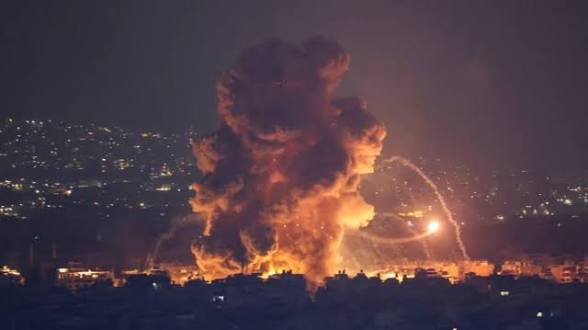
BEIRUT/WASHINGTON — Dawn in southern Beirut broke not to the sound of the call to prayer, but to the howl of fighter jets and the thunder of collapsing concrete. Within less than an hour early Saturday, the Middle East — which had only been simmering behind the scenes — finally overflowed into full-scale open war.
Israel launched its most brutal airstrikes on Lebanon in two decades. Meanwhile, thousands of kilometers away in the skies over Iran, the dark silhouettes of American B-2 Spirit stealth bombers dropped deadly payloads directly above Tehran's two most secret nuclear facilities: Natanz and Fordow.
Casualties began piling up. According to continuously updated data from the Lebanese Ministry of Health, at least 317 people have been killed. That figure includes 42 women and 19 children whose bodies were found among the rubble of apartment blocks in Dahiyeh, a densely populated area also known as Hezbollah's defensive heart.
Screams from Beneath the Rubble
Israel's wave of attacks, dubbed "Operation Northern Purification," targeted more than 150 sites. Not just weapons depots, but buildings that the IDF believes concealed underground command centers.
However, the sound reaching the world's ears was not the blast of missiles, but the desperate cries from the emergency room of Rafik Hariri University Hospital. There, Dr. Rami Khoury is working with makeshift lighting because Lebanon's long-dying power grid has now been completely severed by the strikes.
"They call this a surgical operation," Dr. Khoury told me over a telephone connection occasionally disrupted by signal interference. "What kind of operation makes small children lose their legs and elderly parents run out of breath under rubble?" The overlapping wail of ambulance sirens provided a piercing backdrop to our conversation.
Deadly Blows at Natanz and Fordow
Simultaneous with the roar over Beirut, the Pentagon released a brief statement whose content shocked the global geopolitical map. For the first time since Iran's nuclear crisis emerged, the United States directly and openly acknowledged bombing Iran's uranium enrichment facilities.
Early satellite imagery analysis circulating among open-source intelligence (OSINT) circles indicates severe structural damage at Natanz. As for Fordow — an underground bunker once touted as "immune" to conventional attacks — the US appears to have deployed the most powerful bunker-buster munitions in its inventory.
A senior US military officer, speaking to this correspondent on condition of anonymity, said flatly: "Fordow is no longer a problem. That's all I can say."
Those few words alone were enough to send global crude oil prices soaring wildly, breaching the psychological level of $120 per barrel.
Diplomacy Dies in Islamabad
What happened Saturday was not a bolt from the blue. It was the consequence that many observers had predicted when US Vice President JD Vance left Islamabad, Pakistan, empty-handed just 24 hours earlier.
The two-week ceasefire negotiations mediated by Pakistan collapsed in the final minutes. The issue was classic yet thorny: Iran insisted that any pause in fighting must include a halt to Israeli operations against Hezbollah in Lebanon. Washington, with all its limited influence over Tel Aviv, flatly refused.
When the door of diplomacy closed, the hangar doors of fighter jets swung wide open.
A Divided World Reacts
The White House and Downing Street spoke of "Israel's right to self-defense." The Kremlin and Beijing, unsurprisingly, condemned "dangerous escalation that violates international law." Meanwhile, Turkish President Recep Tayyip Erdoğan called it "state terrorism."
But in Asia — our focus — the reaction is quieter yet more anxious. The Strait of Hormuz, the world's oil lifeline now under full blockade by Iran, is the lifeblood for factories in Japan, cars in Jakarta, and power plants in India.
"Asia imports more than 70 percent of its oil needs," said Dr. Sariwati Abdullah, an energy economist from the University of Indonesia whom I contacted to assess the direct impact of this crisis. "This is no longer just a war story on television. This is about whether we can still fill up our tanks at normal prices next week."
An Unavoidable New Chapter
Saturday morning in the Middle East has ended, but this is only the beginning. Iran has sworn to retaliate with "equal or greater force." Hezbollah still holds more than 100,000 rockets ready to be aimed at Tel Aviv.
The war that everyone had tried to avoid is now right in front of us.
For those of us watching from afar, four things need to be remembered:
First, diplomacy is in cardiac arrest.
Second, military operations have just heated up and will expand.
Third, our wallets for fuel and electricity will feel significantly heavier.
Fourth, the death toll in Lebanon and Iran that we read today will only increase tomorrow and the day after — not decrease.
Copyright © 2026 Asia Economy Times